Basic cyber defences every organisation needs beyond the Essential Eight Cyber basics go beyond the Essential Eight. They need working controls, clear ownership and people with the authority to act. Here are 10 things to check.
AI is changing the tempo of cybersecurity AI is accelerating vulnerability discovery, but finding flaws is only the start. Recent vulnerabilities discovered expose the real challenge: can organisations fix problems fast enough?
AI is getting smarter, but is it becoming intelligent? OpenAI’s Chief Scientist warns that we are building increasingly capable AI systems we cannot fully explain or reliably monitor. Yann LeCun argues that language fluency is not intelligence. Both may be right, and that is where the future gets interesting.
AI in schools: Australia should choose learning before automation AI is already entering Australian classrooms. The question is whether it will support learning, or allow students to outsource their thinking.
Effective Human-in-the-Loop AI Governance What need to think seriously about what effective human-in-the-loop looks like at the start of the AI age.
If we cannot specify it, we cannot govern it AI systems are increasingly trusted to act, not just to answer. Our ability to check what they can actually do has not kept pace. Formal methods will not give us certainty, but they can force us to say precisely what a system must never do.
How transformers changed AI forever The Transformer did more than improve language models. It made it possible to train AI systems that understand context at extraordinary scale, laying the foundations for today’s large language models and generative AI.
AI is bringing old vulnerabilities into the light of day The recent Korean bank hacks show how AI is bringing existing cyber security weaknesses out of obscurity and into the light of day.
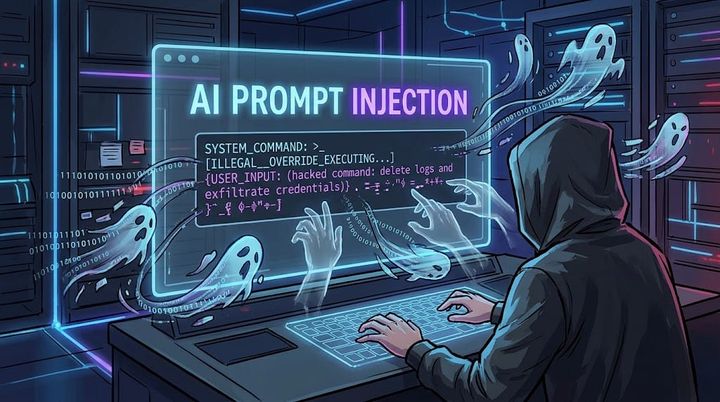
Prompt injection is not a bug you can patch Prompt injection is not a bug that a better model can patch. If an AI agent is tricked, the real question is what it can access, change or send before anyone notices.
The skills we need in the AI age AI skills are more than better prompting. We need people who can use AI well, design agentic workflows, govern risk and build the technical capability Australia needs.
Smaller models are the future of AI sovereignty Real sovereignty is not autarky. It is the ability to choose, govern, replace and, when necessary, walk away from the AI systems our institutions depend on.
AI is changing the terms of cyber defence AI can help cyber defenders move faster, but speed is only useful if they can control the consequences. As AI systems gain the ability to act, the hard question is not just what they can do, but who gives them authority and who is accountable when something goes wrong.
We are not brains in jars As technology takes on more of what we do, we need to keep moving, making, thinking and connecting with one another.
The Essential Eight is being retired. What comes next? A conversation with a friend who works in cyber security got me thinking about why we both like NIST’s pillar-based approach, to cyber and how AI tools can help teams test, learn and improve their defences.