On this day I share the text of a speech given by the New Zealand Governor General The Hon Dame Silvia Cartwright from Wednesday, 25 April 2001:
“Nga mate nga aitua ka tangihia e tatou i tenei wa. Haere. Haere. Haere.
The dead, those we mourn, we lament them now. Farewell. Farewell. Farewell.
Eighty-six years ago, in 1915, early in the morning of the first Anzac Day, New Zealanders began landing on the Gallipoli Peninsula. Between dawn and dusk, 3,100 New Zealanders went ashore, not one of them knowing that their military mission was nearly impossible. And many of them had no time to realise that was so – one in five was killed in the first few hours.
Those who survived suffered grievously. Many would surely have agreed with the Wellington sergeant who, a few weeks later, wrote in his diary: “The world outside has great confidence in their men but I often wonder if they realise or try to realise what a hell the firing line is and know that every man desires, and cannot help desiring immediate peace.”
Of the 8,556 New Zealanders who fought on the Gallipoli Peninsula, 2,721 or almost one third, were dead by the time the allied forces withdrew, and 4,752 had been wounded, often more than once.
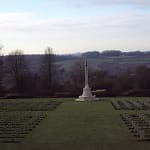
Many of the survivors went on to take part in the terrible fighting on the Western Front, in France and Belgium. Gallipoli, Armentires, the Somme, Messines, Passchendaele, Ypres, all places then completely unknown to New Zealanders, but now resonant with tragedy.
The battles fought in these, to us, obscure places cost this country 13,250 dead and 35,000 wounded, at a time when New Zealand had a population of fewer than 1.2 million.
We have heard these cold statistics many times. What they conceal, except perhaps on a day like today, is the human reality of the sacrifice – the young men and fewer women, many barely more than children, filled with the sense of adventure that only immaturity can instil. And then the terrible grief of those left behind, and of those who spent their lives coping with broken bodies and broken health. Thousands upon thousands of New Zealand families have been devastated by the loss or the injury of husbands, fathers, sons, brothers.
In the Second World War, and later, during wars in Korea and Vietnam, our awareness of the conditions faced by our soldiers, gunners, sailors, aircrew and medical and supply personnel remained limited. But as the immense human cost of these wars became known- 30,000 dead – in the Great War, in the fight against Nazi Germany and other Axis powers, in Korea and in Vietnam, we began to grope for another way to confront tyranny and to resolve conflict.
As the twentieth century passed, increasingly New Zealanders have been involved in conflicts as peacekeepers, or we have provided medical personnel, mine-clearers or mine-clearance trainers and mediators, rather than combatants. So the nature of our participation has changed. But it is this history of sacrifice – by those who lost their lives, and those, including their families at home, whose lives were changed forever – that has led to our deep desire to assist in the pursuit of peace in many parts of the world.
Those who made these sacrifices served our country. And because the cost of that service was so heartbreakingly high, the greatest honour that we, their successors, can do them is to continue to do our utmost, and in their names, to prevent conflict, and to extinguish the fires of war.
May all those who lost their lives in their country’s cause rest in peace. And may we remember forever those who died, those who returned home, and those who lost loved family members, for their sacrifice and for their service.
Nga mate nga aitua ka tangihia e tatou i tenei wa. Haere. Haere. Haere.”